
































How group training impacts the brain
Most of us have experienced it. You arrive at class feeling tired, stressed, or unmotivated. fifty minutes later, you leave feeling energized, lighter, and somehow...
Most of us have experienced it. You arrive at class feeling tired, stressed, or unmotivated. fifty minutes later, you leave feeling energized, lighter, and somehow more like yourself again.
It’s easy to assume that this feeling comes solely from the workout itself. But research suggests there’s another powerful factor at play: the people around us.
Group training doesn’t just benefit the body-it has a profound effect on the brain.
Wired for connection
For most of our history, survival depended on cooperation, belonging, and social bonds. As a result, our brains are still wired to respond positively when we feel part of a community.
When we exercise alongside others, areas of the brain associated with social connection and emotional well-being become activated. We feel more engaged, more motivated, and less alone.
This may be one reason why group workouts often feel easier than training alone-even when the intensity is higher.
Endorphins- from the beginning
Exercise triggers the release of chemicals such as endorphins, dopamine, and serotonin, all of which contribute to feelings of happiness, motivation, and well-being.
But when movement happens in a group setting, the effect appears to be amplified.
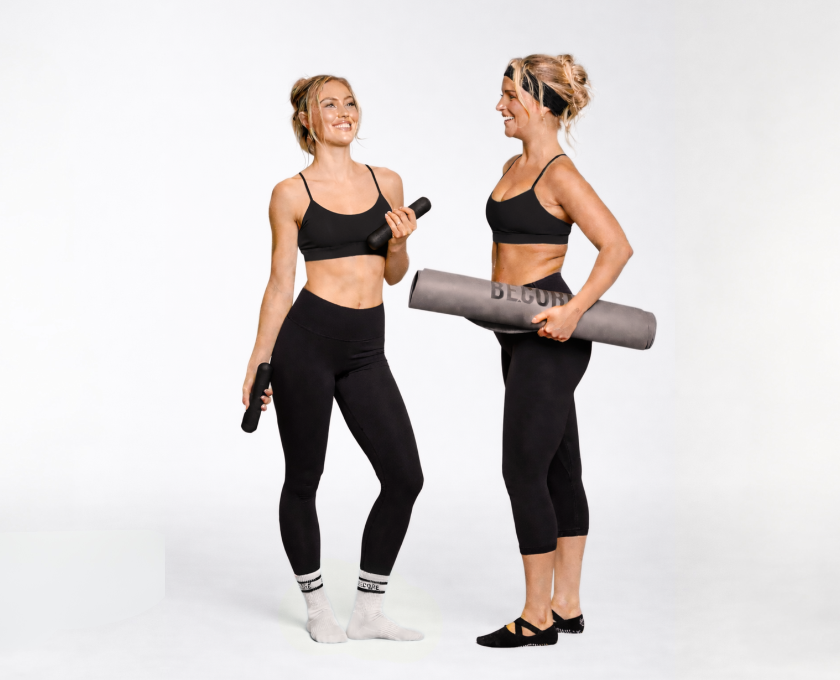
Research suggests that synchronized movement-moving in rhythm with others-can strengthen feelings of connection and create a more powerful emotional experience. Whether it's riding to the beat in a cycling class, flowing through a yoga sequence, or pulsing together in barre, our brains recognize that we're sharing an experience. There are even some resources that connects a generally happier person to synchronized movement to music.
Our bodies move together. Our brains register belonging.
The small interactions
One of the most overlooked benefits of group fitness happens before and after the workout itself.
A smile from the front desk team. A quick conversation with the familiar person next to you. A instructor cheering you on in class.
These moments may seem insignificant, but psychologists often refer to them as "micro-connections"-small social interactions that contribute to our sense of belonging and overall well-being.
In a world where many people work remotely, spend more time online, and experience increasing levels of loneliness, these interactions become surprisingly valuable. Our brains are not designed for isolation. They are designed for connection.
When someone acknowledges us, remembers our name, or simply asks how we're doing, the brain responds positively. These moments can increase feelings of trust, safety, and social belonging while reducing feelings of isolation.
Perhaps that's why many people describe their fitness studio as more than a place to work out. It becomes a place where they feel welcomed, recognized, and part of a community.
And sometimes, that's the reason we come back-not because of the workout itself, but because of how the experience makes us feel.
Motivation Is contagious
Have you ever noticed that you push a little harder when you're surrounded by others?
That's not a coincidence.
Research has shown that people often perform better when exercising alongside others. The phenomenon, known as social facilitation, suggests that our performance can improve simply because other people are present and working toward the same goal.
We feed off the energy in the room. We draw motivation from those around us. And we're reminded that we're not alone in our effort. When you see a neighbor fight, you fight with them.
Reduce stress levels
Stress is a natural part of life, but chronic stress can negatively affect both body and mind.
Regular exercise is one of the most effective tools we have for managing stress. When combined with social connection, the benefits become even greater.
Feeling part of a community can help create a sense of safety and support, allowing the nervous system to shift away from a constant state of pressure and toward recovery and balance.
This may explain why so many people describe group fitness as a mental reset-a chance to disconnect from daily stress and reconnect with themselves.
We change the world one class at a time
In a world increasingly dominated by screens, spaces where people can connect in person have become more valuable than ever.
Group training develops strength, endurance, mobility, and fitness. But it also offers something equally important: connection.
The energy of a room. The encouragement of an instructor. A familiar face at reception. A conversation with someone you've never met before.
These moments may seem small, but together they create an experience that supports both physical and mental well-being.
Perhaps that's why we keep coming back.
Not just for the workout.
But for the feeling that comes with it.
The feeling of being stronger together than we are alone.
More like this

There’s something almost cinematic about stepping into a heated class. The soft glow of dim lighting, the immediate warmth against the skin, the quiet hum...

There’s a lot of noise around “bouncing back” after pregnancy. Timelines, expectations, before-and-afters, and pressure to return to your old routine as quickly as possible....

t’s subtle, but constant. And it’s not random. We live in a culture where “done” is always just out of reach. Always chasing more There’s always...

The lights drop. The bass kicks in. The room moves as one. Throughout the years we have gathered many riders to the cycle room with...

In fitness culture, we often celebrate pushing limits. That feeling of strength, energy, and capability is addictive-but relying on willpower alone isn’t sustainable. True results...

Okey the sun is out- now what? Studies show that from the beginning of the year to early spring, people procrastinate the most. Why? Maybe...

Emma Wiklund has lived several lives in one. First as an international model, constantly in motion. Now as the founder and CEO of Emma S.,...

Some days the world just feels like a lot. The news, stress, responsibilities, and constant comparisons can make everything seem heavier than usual. In moments...

1. Ice Baths – Cold Exposure for Energy and Recovery What is it?Ice plunging has surged in popularity thanks to its amazing benefits for circulation,...